Timber paling fences
Timber fencing
The classic Queensland boundary fence. Here's what each choice means, how the options compare, and what they do to the price.
Short answer
What is a timber paling fence?
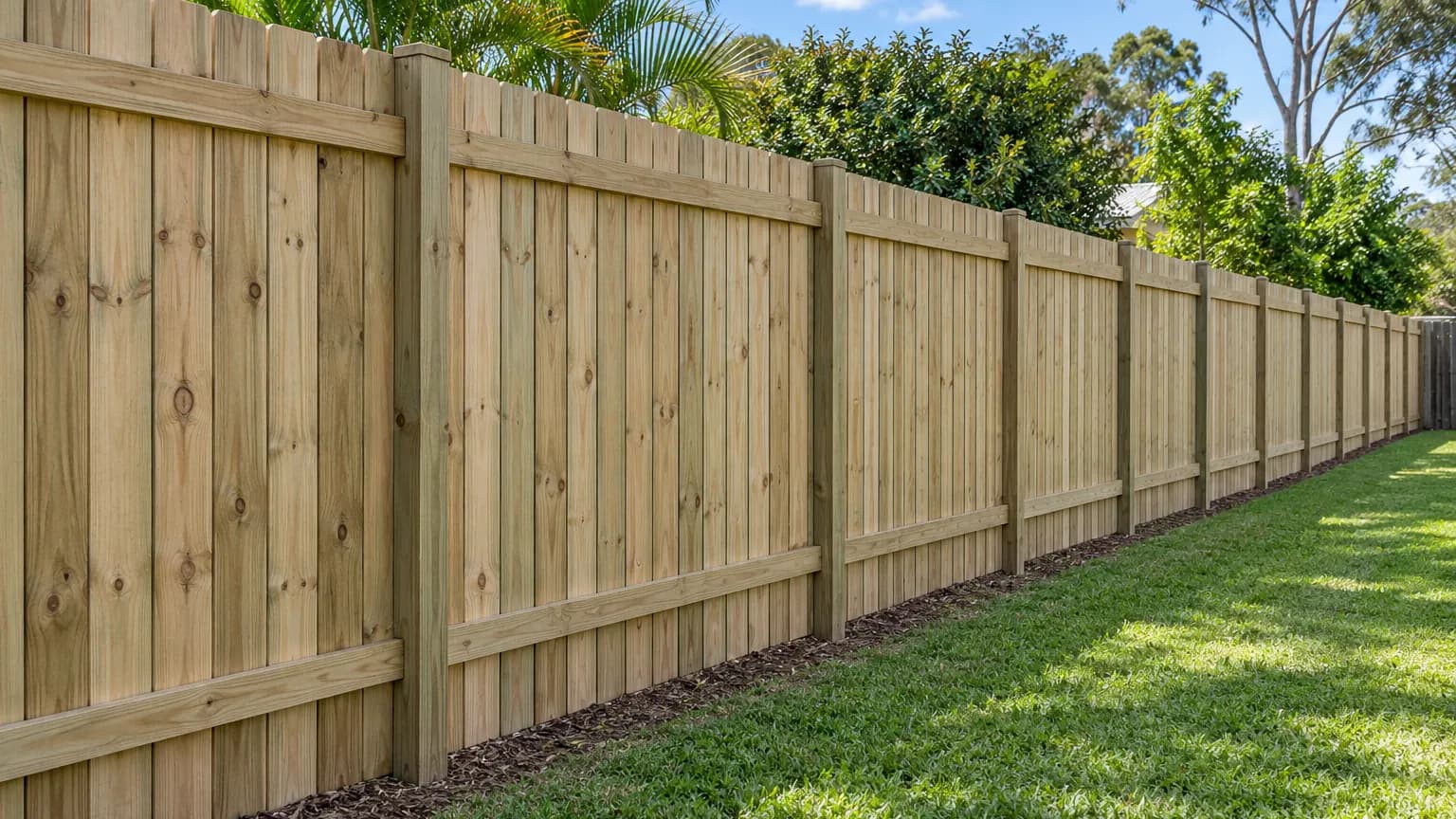
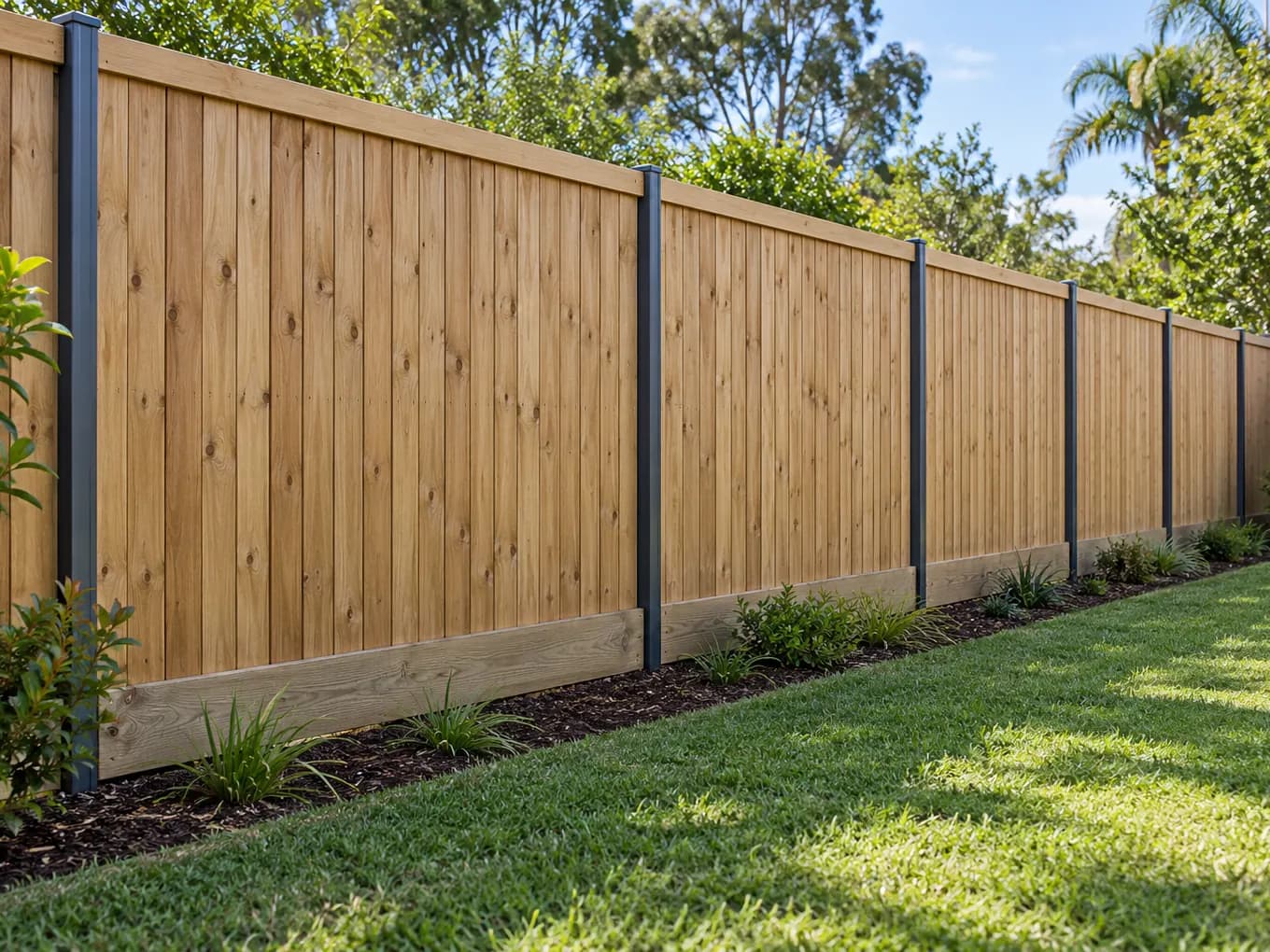
Vertical timber boards, called palings, fixed to horizontal rails, which are fixed to posts set in the ground. You choose the posts, the palings and how they're spaced, then add a sleeper along the bottom and capping along the top if you want them.
The parts of a timber fence
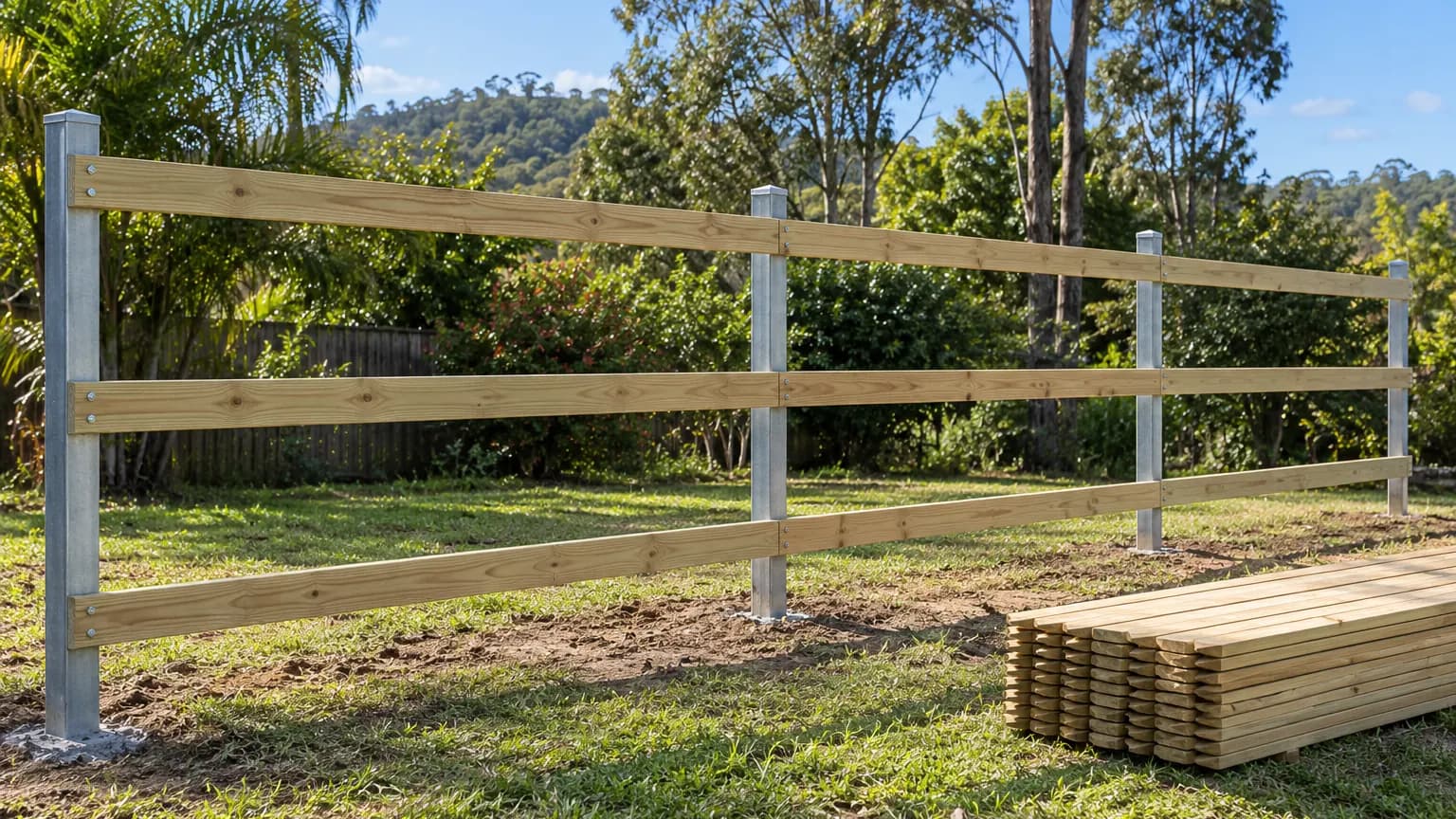
- 1Posts. Set in the ground along the fence line. They carry the whole fence.
- 2Rails. Horizontal timbers fixed to the posts. The palings are fixed to the rails.
- 3Palings. The vertical boards you see. Their type and spacing set the look and the privacy.
- 4Sleeper. Optional. A board along the bottom that keeps palings off the ground and holds back a little soil.
- 5Capping. Optional. A rail along the top that finishes the fence and helps protect the paling tops.
Your choices
Posts, palings and styles
The estimator asks about each of these, one screen at a time, and only shows what your local fencer installs.
Posts
Steel
Galvanised steel. The part in the ground can't rot and termites can't eat it, so steel suits most soils. Can add to the price per metre.
Round timber
The traditional post for a paling fence, with a rounded profile.
Square timber
A traditional timber post with a neater, squared-off look.
With steel or square timber posts you can also choose exposed posts, where the posts sit on the outside face of the fence and show.
Palings
Flat-top 100 mm
The most common choice: wide boards with a square top.
Flat-top 75 mm
Narrower boards, so more of them per metre, for a finer look.
Colonial
Shaped tops for a traditional, decorative look. Usually left without capping.
Paling styles
How the palings sit on the rails. Seen from above, the difference is easy to spot.
10 mm gap
Privacy: SomePalings spaced about 10 mm apart. Lets breeze and light through, and uses the fewest palings.
Butted up
Privacy: GoodPalings side by side with no planned gap. Small gaps can open as the timber dries.
Lapped
Privacy: BestTwo overlapping layers of palings. The most private, but it uses more palings, so it costs more.
Good neighbour
Privacy: GoodPalings alternate sides of the rails, so the fence looks the same from both sides.
Heights
Most backyard fences are 1.8 m. Front fences are often lower. Check your council's rules for front fences and corner blocks.
- 1.2 mLow front fences
- 1.5 mFront yards that need a bit more height
- 1.8 mThe usual backyard height
- 2.1 mExtra privacy, where rules allow
Cost
What changes the price of a timber fence
No made-up averages: your estimate comes from the local fencer's own rates. These are the things that move it.
Height
Taller fences need longer palings and posts.
Length
Fences are priced per metre. Fencers have a minimum job size, so very short fences are charged at that minimum.
Post type
Steel posts can add to the price per metre.
Paling style
Lapped palings use more timber than a gap or butted style.
Sleepers and capping
Each adds to the price per metre.
The old fence
Taking away an old fence is priced per metre removed.
The site
Slope, rock, roots and tight access are checked at the inspection, not charged online.
See your own price
Get your price
Timber or Colorbond?
Both make a good boundary fence. The right one depends on the look you want and how much upkeep you're happy with.
| Topic | Timber | Colorbond |
|---|---|---|
| Look | Timber: Natural timber you can stain or paint | Colorbond: Smooth steel panels in set colours |
| Upkeep | Timber: Weathers over time; a stain or oil helps | Colorbond: No painting needed |
| Privacy | Timber: Depends on the paling style; lapped is the most private | Colorbond: Solid panels |
| Sloping blocks | Timber: Stepped or raked to follow the ground | Colorbond: Stepped panels, with plinths to fill gaps |
| Price | Timber: Depends on height and options | Colorbond: Depends on height and options |
Not sure? Price one, then use "Compare another fence" on your estimate to price the other at the same address.
More on Colorbond fencingTimber fence questions
- How long does a timber fence last?
- It depends on the timber and its treatment, the posts, and how wet the ground stays. Steel posts help because the part in the ground can't rot. Ask the fencer what suits your site at the inspection.
- Which paling style gives the most privacy?
- Lapped palings, because the two overlapping layers leave no gaps. Butted palings come next, though small gaps can open as the timber dries. A 10 mm gap gives the least privacy but lets the breeze through.
- Should I stain or paint a new timber fence?
- You don't have to, but a stain or oil helps protect the timber and keeps the colour more even. New timber may need time to dry before it takes a finish, so ask the fencer when it's ready.
What will your timber fence cost?
Find out in a couple of minutes, from the licensed fencer who covers your area. Free, no obligation.
Get your price